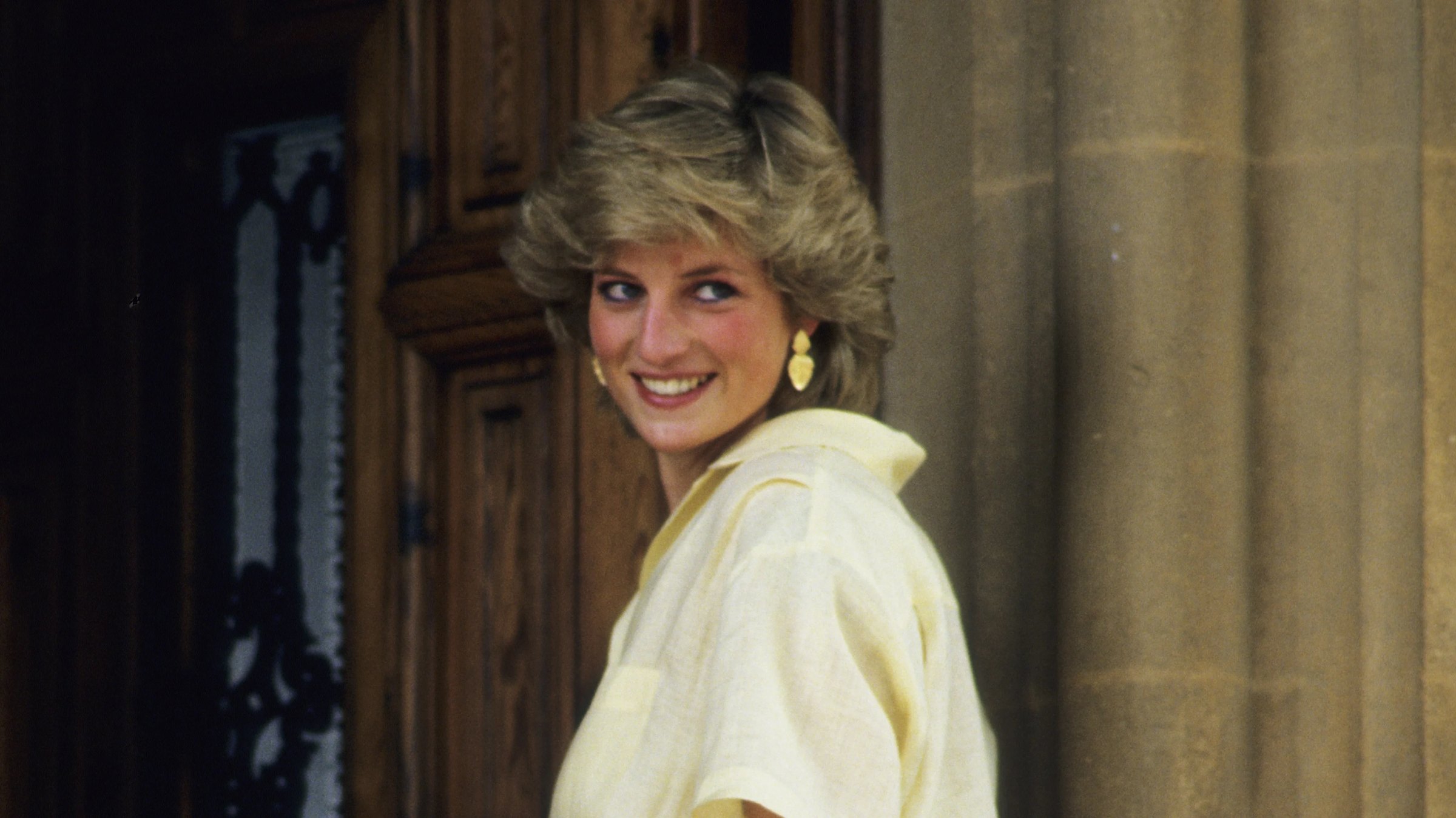
There are women whose influence comes from the title they inherit, and women whose influence becomes larger than the title itself.
Diana, Princess of Wales, belonged to the second category.
She entered public life through one of the most established institutions in the world. Yet the work for which she remains most remembered was not simply the performance of a royal role. It was the creation of a distinct public body of work: humanitarian, emotionally intelligent, visually recognisable, and impossible to separate from the woman herself.
This is why Diana is worth studying through the lens of feminine career strategy. Not because she ran a conventional company, and not because her life should be reduced to a branding exercise, but because she demonstrated a principle that many accomplished women discover only after years of professional achievement:
The most powerful career is often not the one that makes you more legible to an existing system. It is the one that makes your particular combination of history, temperament, taste, intelligence, and values impossible to substitute.
Diana did not invent humanitarian work. She did something more strategic. She made a collection of causes, gestures, environments, and personal qualities cohere into an authority that felt uniquely hers.
That is the architecture of a Category of One.
From inherited position to authored authority
Diana was born into aristocracy and married the heir to the British throne. Her initial public authority was therefore inherited. It came with protocol, expectations, institutional duties, and an established vocabulary of service.
During her marriage, she undertook official royal duties and served as president or patron of more than 100 charities. The Royal Family’s official biography records that she helped publicise work involving homeless people, disabled people, children, and people living with HIV/AIDS.[1]
But an inherited platform is not the same as an authored identity. A platform can give someone access; it cannot decide what that access will mean.
Over time, Diana’s work became increasingly associated with a particular form of public engagement. She did not remain at the distance traditionally expected of a ceremonial figure. She moved toward direct contact, visible tenderness, uncomfortable subjects, and people who were often treated as socially inconvenient or frightening.
The British Red Cross recalls her 1985 visit to Activenture, an adventure camp for children with disabilities. Staff remembered that the children spoke to her as an ordinary person, even a friend, and that she spoke to them in the same way.[2] This detail matters because it reveals the mechanism of her influence. Her appeal was not only that she appeared compassionate in photographs. It was that her manner reduced the social distance between the person with status and the person being seen.
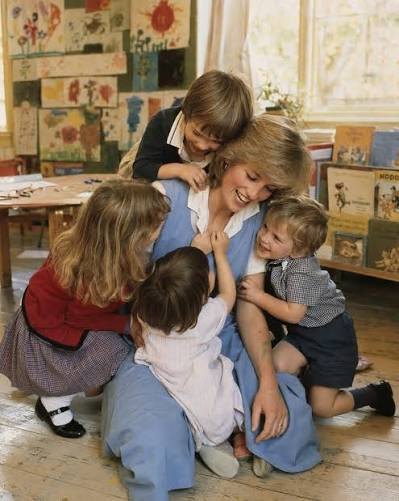
She converted ceremony into contact.
Her Category of One was built from a constellation of dots
A Category of One is rarely created through a single clever slogan. It emerges when the events of a person’s life, their natural gifts, their convictions, and their aesthetic language are aligned rather than kept in separate compartments.
Diana’s public authority was formed from several recognisable elements:
| Element | How it appeared in Diana’s public work | Strategic lesson for a feminine career |
|---|---|---|
| Inherited access | A royal platform that gave her proximity to institutions and global media | Access is raw material; authorship determines its meaning |
| Emotional intelligence | Direct, warm, human contact with people often kept at a social distance | Relational intelligence can become a form of public authority |
| Selective courage | Visible engagement with HIV/AIDS, homelessness, disability, and landmines | The right point of view is often more valuable than a broad list of services |
| Visual coherence | A recognisable presence that made causes memorable without making them feel abstract | Personal style can carry an intellectual and ethical message |
| Human scale | An ability to make large issues understandable through individual encounters | People remember what becomes emotionally and visually legible |
The point is not to imitate Diana’s gestures. It is to understand the logic beneath them.
Her authority grew because her public work did not feel like a collection of unrelated appearances. Her warmth, her causes, her way of dressing, her willingness to enter difficult spaces, and her instinct for human connection reinforced one another. The whole became greater than the parts.
The strategy: turning visibility into consequence
Diana understood, intuitively or otherwise, that visibility is not the same as influence. Visibility becomes influence only when it is directed toward something beyond the self.
Her most strategically powerful campaigns were those in which her presence made an issue difficult to ignore. In 1997, she visited Angola as part of a campaign against anti-personnel landmines. She walked through an active minefield, met survivors, and spoke publicly about the devastation caused by the weapons. The British Red Cross states that the visit brought unprecedented attention to the issue and sparked international discussion.[2]
The Royal Family’s official biography also records her subsequent landmine-related work in London, Washington, and Bosnia.[1]
This was not merely publicity in the shallow sense. It was a form of translation. A technical humanitarian issue became visible through a human body moving through a dangerous landscape. Statistics acquired a face. A distant policy question became something the public could imagine, feel, and discuss.
That is one of the highest uses of personal visibility: not to demand attention for the personality, but to make attention available to a cause.
For a woman building a business or body of work, the lesson is precise. You do not need to be visible everywhere. You need to become associated with a point of view that people can recognise, remember, and trust.
Why authenticity amplified her authority
Diana’s authenticity was not the same as unrestricted self-expression. She was not powerful because she revealed everything. She was powerful because the parts she chose to reveal felt congruent with the way she moved through the world.
The British Red Cross accounts describe her as attentive, calming, conversational, and genuinely interested in the people she met.[2] That quality of presence made her public role feel less like a performance of benevolence and more like an encounter with a person.
This distinction is essential for women who are building premium careers today. Authenticity is not informality. It is not oversharing. It is not the refusal of polish, standards, or discretion.
Authenticity is the removal of unnecessary contradiction between who you are, what you believe, how you work, and what the public repeatedly experiences from you.
Diana’s softness did not cancel her authority. It became one of the ways her authority was recognised.
Her compassion did not make her less strategic. It gave her strategy a human language.
Her glamour did not make her humanitarian work superficial. It helped carry serious causes into rooms, homes, and conversations that might otherwise have remained untouched by them.
Why she became more beloved than the institution around her
It is tempting to reduce Diana’s popularity to beauty, youth, tragedy, or media fascination. Those factors mattered, but they do not fully explain the durability of her cultural presence.
Diana appeared to many people as emotionally accessible in a way that the formal institution of royalty (and, by extension, the more traditional public image associated with Prince Charles) did not always appear to be. Her public style was warmer, more immediate, and more visibly responsive to the people in front of her.
This is not a claim that her popularity had one simple cause, nor that public opinion was uniform. It is a claim about perceived relationship. Diana created the impression that the public was not merely observing her; it was being met by her.
Later polling illustrates the durability of that affection. In a 2022 YouGov survey, 72% of Britons reported a positive view of Diana, compared with 67% for King Charles.[3] The figures should not be treated as a timeless verdict on two individuals, but they do support the broader observation that Diana’s emotional and cultural resonance remained unusually strong decades after her death.
The strategic distinction is this: Charles represented an institution with historic authority. Diana became an individual with relational authority.
Institutional authority says, “This role matters because it has always mattered.”
Relational authority says, “This matters because I can make you feel why it matters.”
The most powerful feminine leaders often learn to hold both: the standards of an institution and the recognisability of a person.
The educational dimension of her work
Diana should not be described inaccurately as the founder of an education business. Her contribution was different and, in some ways, more interesting.
She participated in a form of public education through attention. She educated the public about the humanity of people living with HIV/AIDS. She educated audiences about the realities of disability, homelessness, and landmines. She used presence to challenge inherited assumptions about who deserved proximity, dignity, and care.
Her work also demonstrated that education is not limited to classrooms or formal curricula. Education can occur through example, cultural conversation, patronage, institutional partnership, and the deliberate re-humanising of an issue.
This is highly relevant to the modern woman building an authority-led business. Many women do not merely sell information. They educate the market into a new way of seeing: a new standard, language, category, method, or possibility.
That is particularly true when a woman’s work concerns identity, leadership, wellbeing, aesthetics, culture, relationships, or the design of a more meaningful life. Her business becomes more than an offer. It becomes a school of perception.
What feminine career builders can learn from Diana
The lesson is not to become more like Diana. The lesson is to become more completely yourself, and then organise your work so that your distinctiveness becomes useful to other people.
A woman building a Category of One business can begin by asking:
Which experiences formed my way of seeing? The chapters of your life that once appeared disconnected may contain the raw material of your intellectual property.
What do I notice that others overlook? A distinctive business often begins with a pattern you can see before the market has language for it.
Which qualities do people repeatedly experience in my presence? Your natural way of thinking, discerning, calming, challenging, refining, or connecting may be more strategically valuable than a borrowed business persona.
What subjects am I willing to make more human? Authority deepens when your work does not merely inform people, but changes the way they perceive themselves and the world around them.
What should remain private? Selective visibility is not a limitation. It is part of luxury, authority, and self-possession.
Diana’s career became unforgettable because her public work carried her signature. It was not generic philanthropy performed by a generic public figure. It was her way of bringing proximity, beauty, emotional fluency, and courage to subjects that required a different kind of attention.
The First Lady principle: poise with consequence
The feminine model I call the First Lady Business is not about ornamental femininity or playing a supporting role. It is about building a body of work through poise, selective visibility, cultural intelligence, relationship capital, intellectual authority, and strategic delegation.
Diana offers a particularly complex case study because her authority was born inside an institution, developed through public scrutiny, and eventually became inseparable from her own human signature.
She showed that a woman can lead without adopting the harshest visual and behavioural codes of masculine competition. She can be polished without becoming inaccessible. She can be emotionally intelligent without surrendering discernment. She can use beauty without allowing beauty to become the entire argument.
Most importantly, she showed that popularity is not always created by perfect control. Sometimes it is created by the courage to let the public encounter something recognisably alive.
That is the deeper business lesson.
Your most valuable work may be hidden inside the parts of your life you have been taught to dismiss as too personal, too feminine, too intuitive, too aesthetic, too unusual, or too difficult to categorise.
Those are often the very dots that, when naturally aligned, become your authority.
The question for your own career
Diana did not become singular by asking how to fit more elegantly into the existing royal model. Her lasting influence emerged when her natural humanity began to reorganise the meaning of the role around her.
The question for a woman building her next chapter is therefore not simply:
What business should I start?
It is:
What body of work could only be authored by me?
The answer may be found in the events you have survived, the subjects you return to, the taste you cannot explain, the standards you refuse to compromise, the talents you have treated as ordinary, and the form of leadership people experience when they are with you.
A luxury career is not necessarily louder, larger, or more visible. It is more coherent. It is a business in which your identity, philosophy, method, aesthetic, and relationships point in the same direction.
That is how a woman stops competing inside an existing category.
That is how she becomes the category.